Meetings
Should Meetings Have an Agenda?
Should meetings have an agenda? Learn how to implement effective agenda-driven meeting practices in your organization.
Use calendar agenda validation to catch vague meeting invites before they are sent and make agenda rules part of meeting policy.
Calendar agenda validation is checking the meeting invite before it is sent automatically. Does the meeting have a clear purpose? Is there enough agenda detail for people to prepare? Does the invite explain why this meeting should exist at all?
That sounds small, but it is where meeting policy becomes practical. A meeting guideline in a handbook asks people to remember the rule later. Agenda validation puts the rule in the calendar, at the moment the organizer is creating the meeting.
This article is about that narrow workflow. For the broader system of meeting rules, ownership, rollout, and governance, start with the Meeting Policy Guide. For the bigger question of whether meetings should have agendas, read Should Meetings Have an Agenda?.

Calendar agenda validation means checking the agenda quality of a calendar invite before the meeting reaches everyone else's calendar.
The validation can be simple:
The goal is not to block every imperfect meeting. The goal is to catch weak invites before they turn into weak meetings.
A meeting agenda is not useful because it exists in theory. It is useful because it changes what people do before the meeting.
When the agenda is visible in the invite, participants can decide whether they are needed, prepare the right input, challenge unclear purpose, or suggest async work instead. When the agenda is missing, the meeting still lands on the calendar. The quality problem has already been distributed.
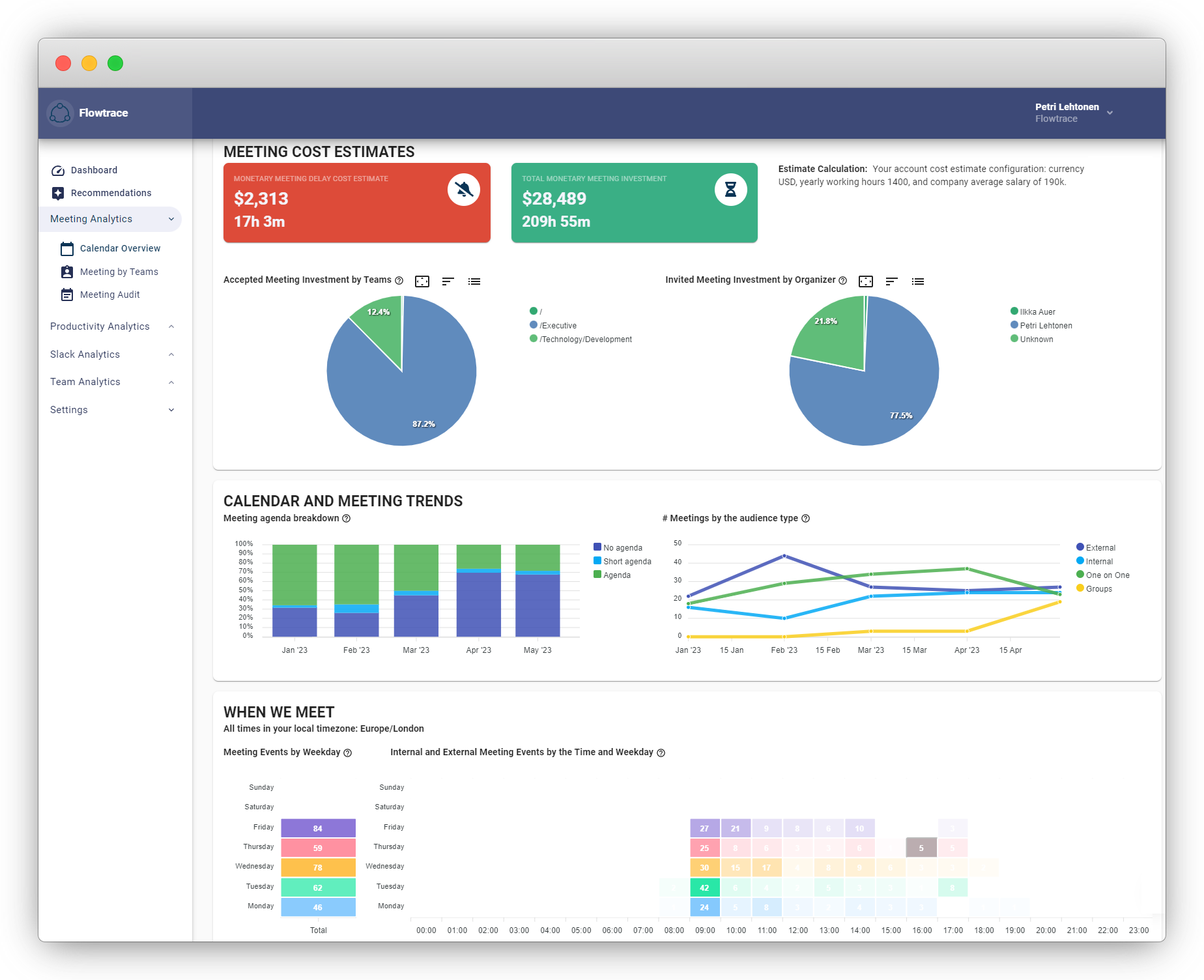
Flowtrace research has shown why this matters. When this article was first published, Flowtrace's meeting research found that 60% of one-off meetings and 64% of recurring meetings had zero characters in the agenda field. That older statistic is still useful because it describes the practical problem: many meetings are created before their purpose is visible.
The newer Flowtrace meeting statistics work tells a similar story with a more careful measurement bucket. In the 2026 report dataset, based on complete 2025 production data, 67.4% of meetings with agenda-length data had fewer than 100 agenda characters. That bucket includes both empty agendas and very short agendas, so it should not be read as a pure no-agenda statistic. But for agenda validation, the signal is still clear enough: a large share of meetings are being scheduled with little written context.
That is why calendar-side validation matters. It moves the improvement work upstream.
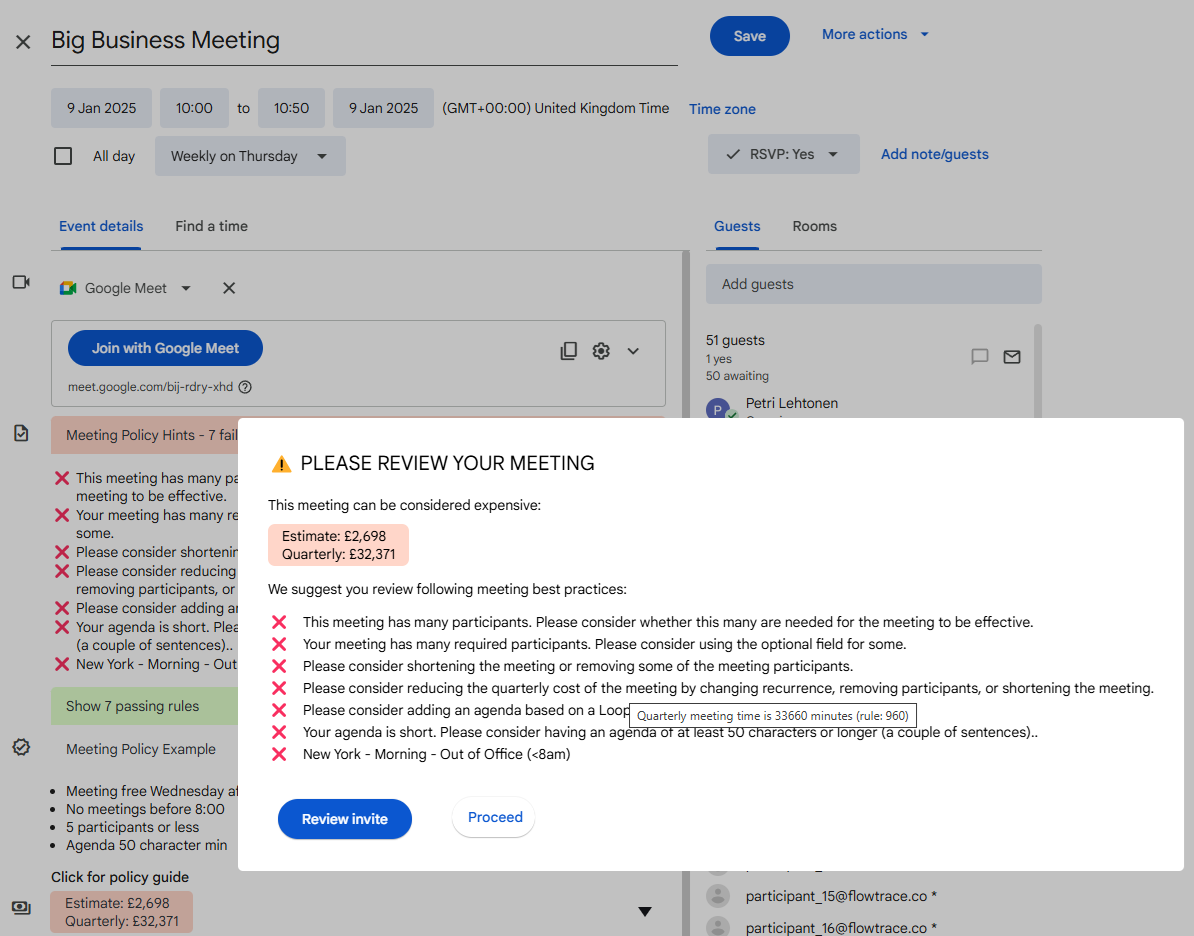
The workflow usually has four parts.
First, define the rule. A company may decide that internal meetings need a purpose, agenda, or expected outcome before the invite is sent. Recurring meetings may need stricter rules because they create repeated cost.
Second, show the rule in the calendar workflow. This is where Google Calendar and Outlook matter. If the reminder appears while the organizer is drafting the invite, the fix is easy. If the rule is buried in a policy document, it depends on memory.
Third, track the pattern. One missing agenda is a small issue. A team, department, or recurring meeting series that repeatedly skips agendas is a management signal.
Fourth, review the data. Agenda validation should feed into meeting analytics, meeting policy review, and recurring meeting cleanup. The goal is not to shame organizers. The goal is to understand where meeting habits need better defaults.
The first challenge is the obvious one: agendas are missing. The invite goes out with a title, a time, and a participant list, but no explanation of what people are expected to decide or prepare.
The second challenge is vague agenda text. Phrases such as "team updates", "sync", "discussion", or "alignment" can be useful meeting titles, but they are weak agendas. They do not tell people what decision is needed, what tradeoff is being discussed, or what input to bring.
The third challenge is timing. An agenda added five minutes before a meeting may technically exist, but it does not help people prepare. For higher-value meetings, the invite should explain the purpose early enough for attendees to act on it.
The fourth challenge is ownership. If nobody owns the rule, agenda quality becomes personal preference. Some organizers are disciplined. Others are rushed. The calendar fills anyway.
This is where agenda validation connects to meeting invite rules, attendee discipline, and recurring meeting governance. Agenda quality is not only a writing problem. It is part of how the organization decides whether a meeting deserves time.
Agenda validation helps in five practical ways.
It gives attendees a reason to prepare. A clear agenda lets people bring the right information, challenge the meeting if they are not needed, or suggest a better async path.
It reduces vague meetings before they happen. The best time to improve a weak invite is before it reaches ten calendars.
It makes recurring meetings easier to review. A recurring meeting with no agenda, unclear ownership, and many attendees should probably be questioned. Some should be improved. Some should be retired. See the guide to cutting recurring meetings for the cleanup side of that work.
It supports meeting policy without making the policy feel theoretical. The Meeting Policy Guide explains the broader operating model. Agenda validation is one of the practical rules that can sit inside that model.
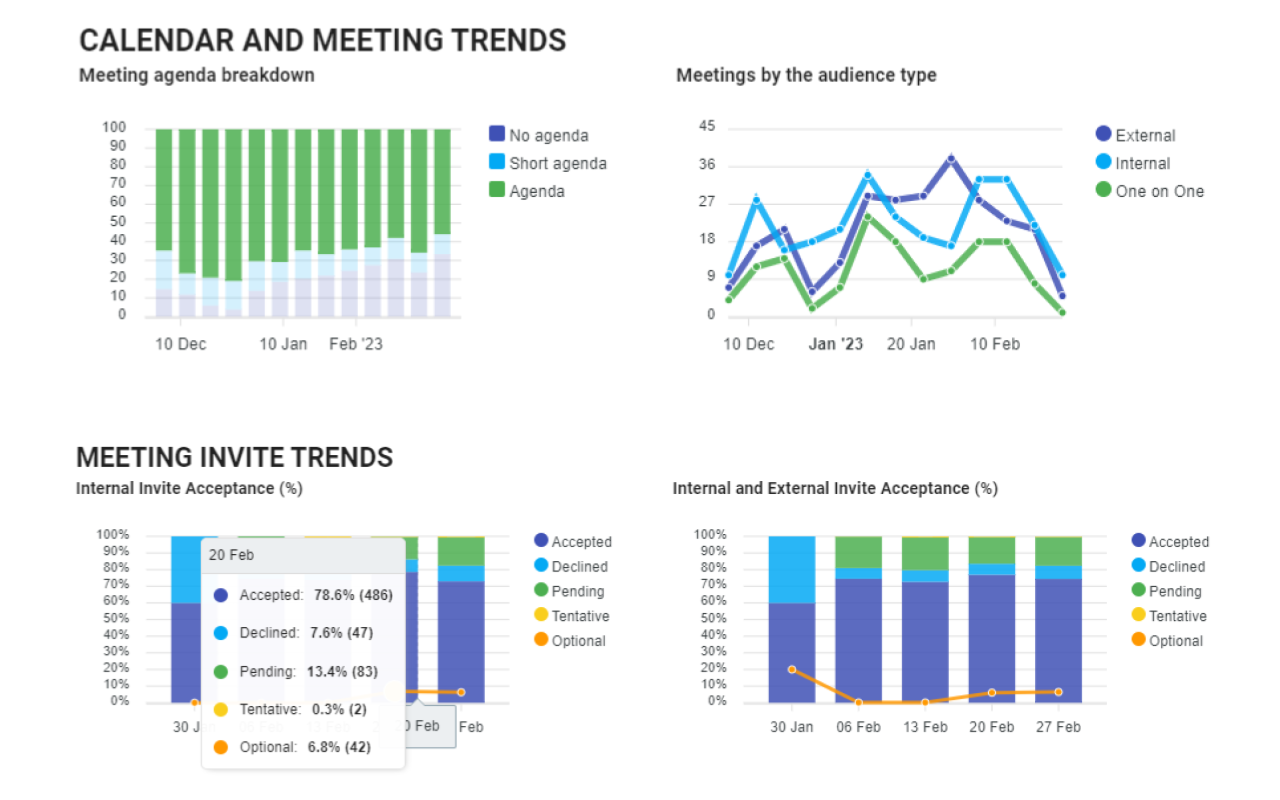
It creates a measurable signal. Leaders can see whether agenda discipline is improving, whether some teams need help, and whether calendar-side nudges are changing behavior.
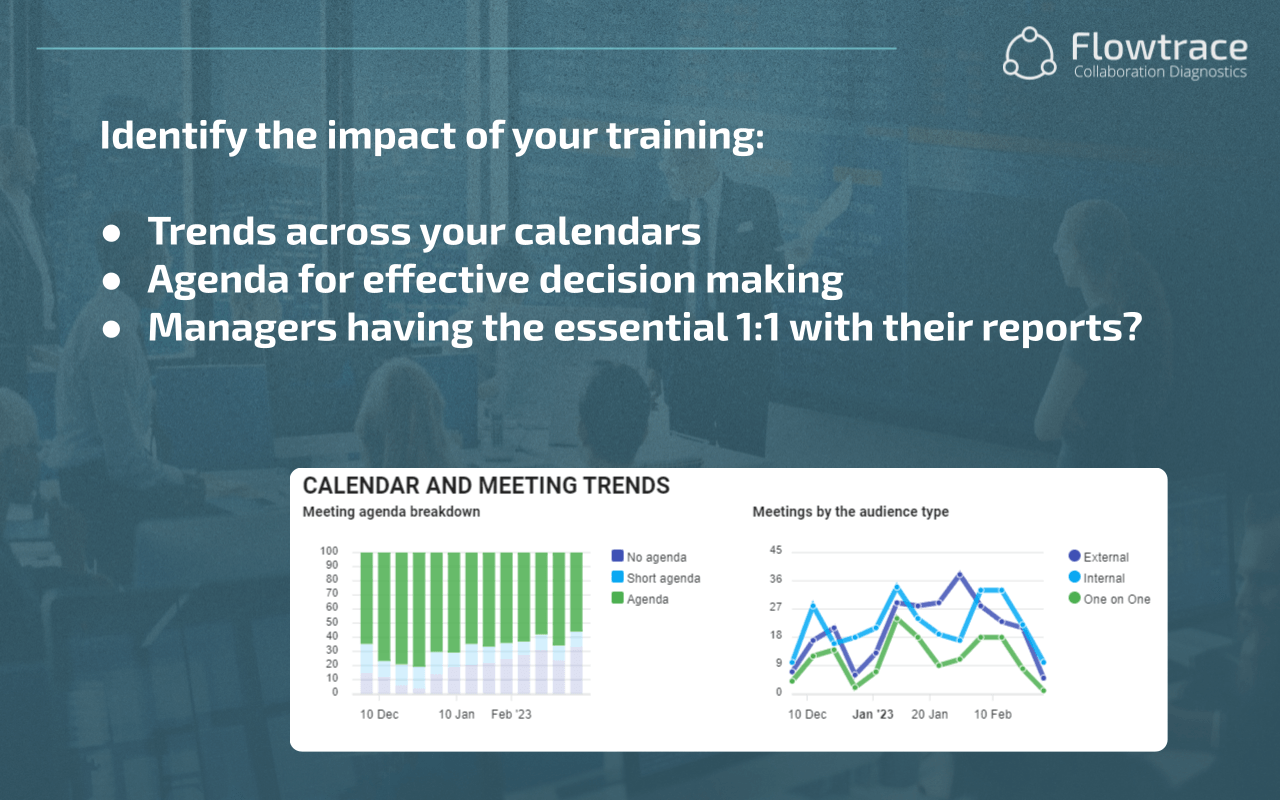
Flowtrace supports agenda validation in two connected places: analytics and the calendar workflow.
The analytics layer shows how often meetings include enough agenda detail, where agenda discipline is weak, and whether policy changes are improving the pattern. This matters because a company cannot manage meeting quality from anecdotes alone.
The calendar layer helps organizers improve the invite before it is sent. Flowtrace can support agenda rules, meeting cost visibility, and other meeting policy checks in the normal scheduling flow for Google Calendar and Outlook.
That combination is important. Analytics can show that agendas are weak. Calendar-side validation can change the next invite. Then analytics can show whether the change stuck.
For a broader view of the measurement layer, use the Meeting Analytics Guide. For policy rollout and ownership, use the Meeting Policy Guide.
If you are starting from scratch, do not over-engineer the first rule.
Start with this:
Internal meetings should include a clear purpose or agenda before the invite is sent. Recurring meetings should also have an owner and review point.
Then decide what happens when the rule is not met. A soft warning may be enough for most meetings. A stronger warning may make sense for recurring meetings, large meetings, or expensive meetings.
This is the line to keep in mind: agenda validation should make good behavior easier. It should not create calendar bureaucracy for its own sake.
Calendar agenda validation is a check inside the meeting scheduling workflow. It looks for a clear agenda, purpose, or required meeting information before the invite is sent.
The calendar is where the meeting behavior happens. If the agenda rule appears while the organizer is creating the invite, the organizer can fix the issue before the meeting reaches everyone else.
A useful rule can check whether the invite has a purpose, enough agenda detail, expected outcomes, required attendees, or a recurring meeting review trigger.
Agenda validation turns meeting policy into a practical workflow. Instead of relying on people to remember a guideline, the calendar can prompt them when the invite is missing required agenda information.
Validating meeting agendas will not fix meeting culture by itself. It will, however, fix one of the common failure points: vague meetings being accepted because nobody challenged the invite early enough.
Use agenda validation as one rule inside a larger meeting policy. Measure the pattern, show the rule in the calendar, review the trend, and adjust. That is how agenda discipline becomes more than advice.
Flowtrace helps teams connect that loop across meeting analytics, Google Calendar, Outlook, and meeting policy.
Should meetings have an agenda? Learn how to implement effective agenda-driven meeting practices in your organization.
Learn why meeting agendas matter, how to validate agenda quality, and which signals show whether agendas improve focus, decisions, and follow-through.
Optimize your meetings with effective meeting invite rules. Learn best practices for clear objectives, detailed agendas, and efficient scheduling to...