Meeting analytics is attracting a lot of intention because leaders finally want a clear view of how collaboration time is being spent, where meeting overload is forming, and how meeting habits are affecting delivery, but the privacy side of this conversation is still treated like an afterthought in many rollouts, which is risky because meetings are one of the few places where sensitive topics reliably appear without warning.
If you have ever sat in a meeting where someone mentioned sick leave, a medical condition, a performance concern, a client issue, a legal dispute, or a security incident, then you already understand the core problem: the moment a tool starts collecting or storing what is said, the organisation is no longer dealing with “meeting data” in an abstract sense, it is dealing with personal data, sometimes sensitive personal data, and often data that was never intended to be captured as a durable record.
This is why meeting analytics data privacy is not a checkbox topic, it is the foundation that determines whether an analytics initiative becomes a trusted operational system or an internal compliance headache that employees avoid.

Why Meeting Analytics Data Privacy Is A Serious Issue
Most meeting culture happens in context, and context is exactly what creates privacy risk, because people talk the way they do in meetings precisely because they expect a degree of ephemerality, even in organisations that value documentation.
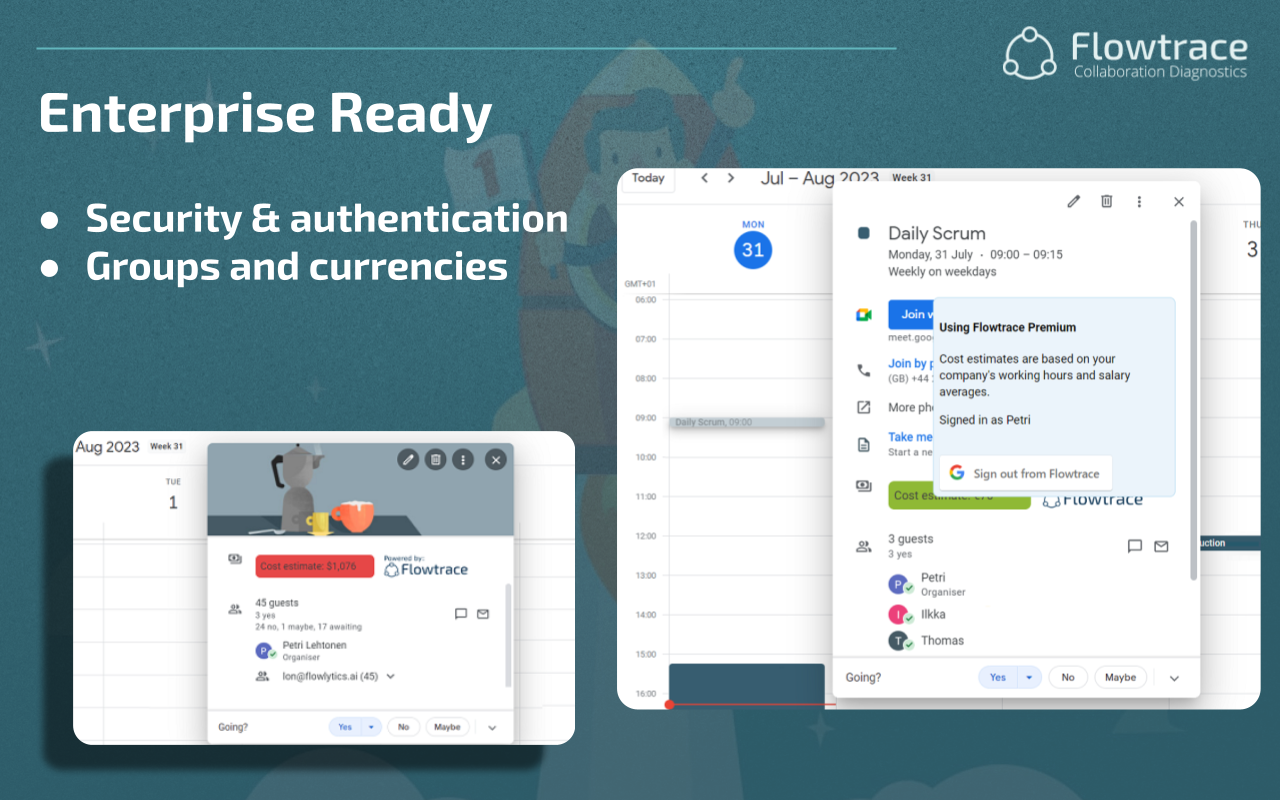
From a regulatory standpoint, this matters because privacy laws generally take a broad view of what counts as personal information, so “we only captured meeting notes” can still mean you captured information that identifies, relates to, or can be linked back to an individual, which is why companies that casually introduce recording and transcription tooling often discover that the operational convenience arrives with legal and HR consequences attached.
Under the CCPA, for example, personal information is defined broadly as information that can reasonably be linked to a consumer or household. Under PIPEDA, personal information is similarly framed as information about an identifiable individual, with clear expectations around how organisations collect, use, and safeguard it.
The risk rises further when meeting content includes health-related information, because health data is treated as a special category under GDPR-style frameworks and is subject to higher protection thresholds, which is exactly the kind of information that can surface in manager to employee conversations about sick leave, disability accommodations, burnout, or return-to-work planning.
What Most Companies Do Today, And Why It Creates Unnecessary Exposure
In practice, many organisations end up with a meeting tooling stack that collects far more than they intended, often because the default product narrative is that the tool should “understand the meeting,” which typically means recording audio, generating transcripts, summarising discussion, and storing artifacts in a third-party system that the organisation does not fully control.
The common pattern: capture everything, decide later what matters
When companies enable transcription or AI note-taking broadly, they often assume they can manage risk later through policy, permissions, or retention settings, but the exposure begins at capture, because once content exists and is stored, it can become discoverable, misused, over-shared, or retained longer than expected, and the organisation now has a new category of business records that can be pulled into investigations, disputes, or audits.
White and Case has highlighted governance risks in the “record everything” model, including the possibility that transcripts and summaries can create discovery exposure and surface as business records that were never intended for external scrutiny, particularly when they are stored by third-party vendors.
Lockton also notes that many AI transcription services operate in the cloud and can involve third-party storage and retention practices that raise confidentiality and privacy concerns.
Why this becomes a compliance and trust problem
Even if a vendor is reputable, organisations still have to answer hard questions once meeting content is being captured at scale, such as where the data is stored, how long it is retained, who can access it, whether it is used for model training, and what happens when an employee requests access or deletion, which can be operationally complex under laws like CCPA and GDPR-style regimes.
There is also a human problem that shows up quickly, which is that employees start editing themselves in meetings once they realise everything could be stored verbatim, and the meetings that still contain sensitive information become the ones people are least comfortable having recorded, which means the rollout either fractures into inconsistent behaviour or becomes a silent source of anxiety that damages meeting culture rather than improving it.
Why Transcription Tools Are Risky For Meeting Analytics
Transcription tools can be valuable in the right setting, especially when the primary goal is documentation of a customer call or accessibility support, but they create disproportionate privacy and governance risk when they are used as the default layer for organisational analytics, because analytics does not require content to be useful.
The problem is not only what is captured, it is also what can be inferred, because transcripts can reveal health information, union discussions, legal strategy, interpersonal conflict, performance management details, or security issues, and even if that content was said casually, the act of turning it into a stored artifact changes its character from “conversation” into “data,” which increases the organisation’s obligations and the potential blast radius of any mistake.
This is why many security teams are cautious about third-party meeting bots that join calls and capture content, particularly when the tools have not been fully assessed or when the data flow is not tightly controlled, since the convenience of automation can come at the expense of governance clarity.
What Privacy-First Meeting Analytics Should Look Like
The most reliable way to reduce privacy risk is to avoid collecting the most sensitive data in the first place, which in this category usually means treating meeting content as out of scope for analytics unless there is a specific, justified use case that has been reviewed properly.
A privacy-first meeting analytics approach typically has four characteristics:
- It is built around metadata, meaning it focuses on the structure of collaboration, such as duration, frequency, attendee count, recurrence patterns, and time-of-day behaviours, rather than trying to interpret what was said.
- It minimises collection, so it only ingests data that is required for the analytic outcomes it claims to produce, rather than collecting broadly and deciding later what is useful.
- It avoids sensitive content by design, which makes compliance simpler because the organisation reduces the chance of capturing special-category information in the first place.
- It supports governance controls, so companies can apply filtering, access rules, and reporting boundaries that reflect how they want analytics to be used, particularly if the goal is cultural improvement rather than employee monitoring.
How Flowtrace Approaches Meeting Analytics Data Privacy
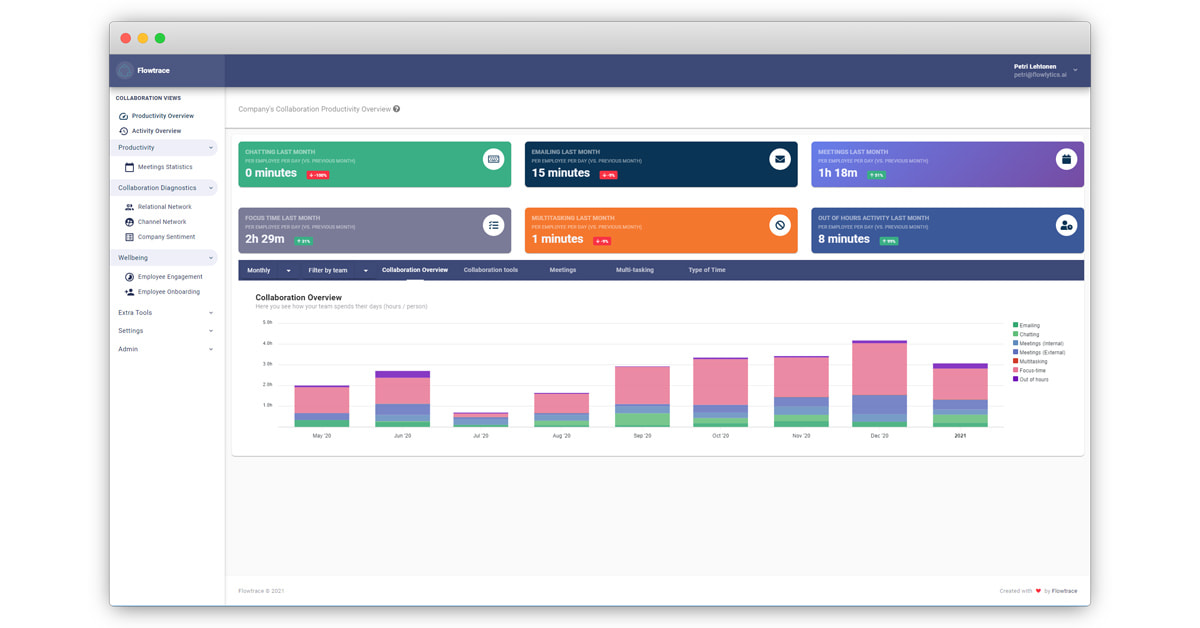
Flowtrace is designed around the idea that you can understand meeting culture and meeting load without recording meetings, transcribing conversations, or storing what people said, which is not only a product decision but also a governance decision, because it reduces the chance that the analytics system becomes a repository of confidential or sensitive information.
Metadata instead of content
Flowtrace meeting analytics uses a process that collects meeting metadata such as duration, frequency, participant count, recurring patterns, and cost calculations, while explicitly positioning the platform as operating without access to sensitive meeting content. Flowtrace limits processing to metadata wherever possible and does not store the contents of private communications, which includes meetings, chat communication, and other collaboration content.
Compliance posture without pretending compliance is automatic
On compliance, Flowtrace conducts audits annually and references GDPR compliance in its documentation, while also inviting organisations to discuss specific compliance needs, which is the right posture for serious buyers because compliance is rarely a single vendor claim, it is a combination of product design, data handling, customer configuration, and internal policy.
When organisations talk about GDPR, CCPA, and PIPEDA together, the common thread is that personal information is broadly defined and sensitive categories require more care, so a metadata-only analytics model reduces exposure by limiting the most volatile input, which is the content layer where health information and HR-sensitive conversations can appear without warning.
Why this matters specifically for manager to employee conversations
Manager to employee meetings are often the exact meetings that organisations want to protect most, because they can include health-related details, leave planning, performance context, compensation discussions, or interpersonal issues, and once those conversations are captured verbatim, the organisation has created a new set of highly sensitive records that need strict controls and clear retention policies, which is why many teams prefer an analytics approach that can improve meeting culture without turning private conversations into searchable artifacts.
Understand Your Meeting Culture with Privacy
Meeting analytics should give organisations clarity about how collaboration time is being used, but it should not do that by expanding the organisation’s collection of sensitive personal data, especially when the value of the analytics does not depend on knowing what was said in the room.
When companies choose tools that record and transcribe by default, they often end up with a compliance and trust burden that is larger than the operational benefit, particularly because meeting content naturally includes HR-sensitive and health-related topics that were never meant to become durable records, while a metadata-first approach reduces exposure and makes the analytics easier to govern over time.
Flowtrace’s approach is built around this principle, focusing on meeting metadata rather than meeting content, which supports a privacy-first analytics model that can align with GDPR, CCPA, and PIPEDA expectations when combined with the right internal policies and configuration, and it allows organisations to improve meeting culture without turning everyday conversations into a compliance nightmare.
Frequently Asked Questions: Meeting Analytics Data Privacy